The doses below apply to adults unless otherwise stated, and paediatric doses are given per kilogram with the stated maximum. Always check against the local guideline and the Swedish medicines compendium (FASS) before administration — concentrations and formulations differ between units, and most serious dosing errors arise at the dilution step, not in the choice of dose.
Paediatric doses are calculated on actual body weight unless otherwise stated. When the weight of a child aged 1–10 years is unknown: estimate it as (age in years + 4) × 2 kg, but use a length-based tool if one is available.
This page is a rapid guide, not a treatment review. For a fuller account of two of the commonest acute drug problems, see Warfarin therapy and Opioid therapy in severe pain.
Cardiac arrest
| Drug | Adult | Child |
|---|---|---|
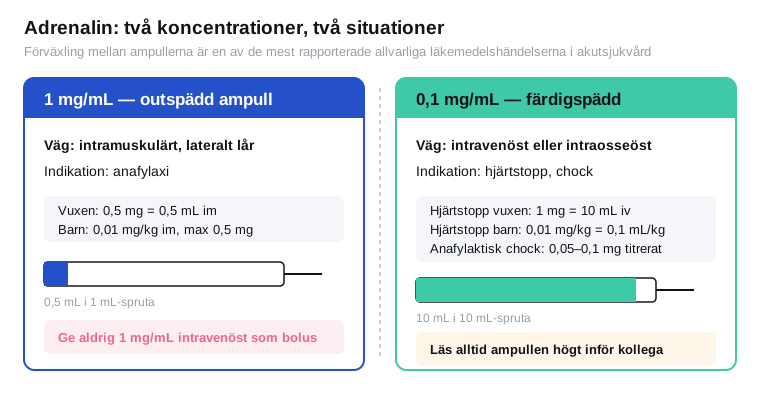
| Adrenaline | 1 mg IV/IO every 3–5 min. In asystole and PEA as soon as access is available; in VF/VT only after the 3rd defibrillation | 0.01 mg/kg (0.1 mL/kg of 0.1 mg/mL), maximum 1 mg, every 3–5 min |
| Amiodarone | 300 mg IV after the 3rd defibrillation, a further 150 mg after the 5th | 5 mg/kg, maximum 300 mg |
| Lidocaine (alternative) | 100 mg IV, a further 50 mg | 1 mg/kg |
| Magnesium | 2 g (8 mmol) IV in torsades or hypomagnesaemia | 25–50 mg/kg, maximum 2 g |
| Calcium chloride | 10 mL of 100 mg/mL in hyperkalaemia, hypocalcaemia, calcium channel blocker poisoning | 0.2 mL/kg |
| Sodium bicarbonate | 50 mmol in hyperkalaemia or tricyclic poisoning | 1 mmol/kg |
Reversible causes: hypoxia, hypovolaemia, hypo-/hyperkalaemia and metabolic disturbance, hypothermia, tamponade, toxins, thrombosis (coronary or pulmonary), tension pneumothorax.
No drug has been shown to improve the neurological outcome in cardiac arrest. High-quality compressions with minimal interruptions and early defibrillation are what determine the outcome; drugs are given without pausing the compressions.
Anaphylaxis
Intramuscular adrenaline into the lateral thigh is the first-line treatment and must be given before anything else. An antihistamine and a corticosteroid do not affect the acute course.
| Measure | Adult | Child |
|---|---|---|
| Adrenaline IM (1 mg/mL) | 0.5 mg (0.5 mL), repeated after 5 min if needed | < 6 years 0.15 mg · 6–12 years 0.3 mg · > 12 years 0.5 mg (0.01 mg/kg) |
| Adrenaline IV (only in shock, by experienced staff) | 0.05–0.1 mg at a time, diluted to 0.1 mg/mL | 1 µg/kg, titrated |
| Fluid | 500–1,000 mL Ringer's acetate rapidly | 20 mL/kg |
| Nebulised adrenaline | 2 mg neb for stridor | 2 mg neb |
| Salbutamol | 5 mg neb for bronchospasm | 2.5 mg (< 20 kg) |
| Betamethasone | 8 mg IV | 0.25 mg/kg, maximum 8 mg |
| Clemastine | 2 mg IV | 0.0125–0.025 mg/kg |
flowchart TD
  A[Suspected anaphylaxis: acute onset with skin or mucosal involvement plus respiratory compromise, a fall in blood pressure or marked abdominal symptoms] --> B[Stop the exposure. Call for help. Adrenaline 1 mg per mL intramuscularly into the lateral thigh immediately]
  B --> C[Lay the patient flat with the legs raised. Give oxygen. Insert two large-bore cannulae]
  C --> D{Improvement within 5 minutes}
  D -- No --> E[Repeat adrenaline intramuscularly. Give Ringer's acetate 500 to 1000 mL rapidly]
  E --> F{Shock persisting after two to three intramuscular doses}
  F -- Yes --> G[Adrenaline intravenously 0.05 to 0.1 mg at a time of the 0.1 mg per mL solution, by experienced staff with continuous monitoring. Consider an infusion]
  D -- Yes --> H[Treat the remaining symptoms: nebulised adrenaline for stridor, salbutamol for bronchospasm]
  E --> H
  G --> H
  H --> I[Give betamethasone and an antihistamine. These do not affect the acute course but may reduce late symptoms]
  I --> J[Observe for at least 4 to 8 hours, longer after a severe reaction or repeated doses of adrenaline]
  J --> K[An adrenaline auto-injector with a demonstration, a written action plan and referral for allergy investigation]
Observe for at least 4–8 hours after anaphylaxis that required treatment; biphasic reactions occur. Everyone must go home with an adrenaline auto-injector and written instructions.
Patients taking beta blockers may respond poorly to adrenaline. If there is no response, give glucagon 1–5 mg IV followed by an infusion.
Arrhythmias
| Drug | Adult | Child | Comment |
|---|---|---|---|
| Adenosine | 6 mg as a rapid IV bolus, then 12 mg, then 12 mg | 0.1 mg/kg (maximum 6 mg), then 0.2 mg/kg (maximum 12 mg) | Give into a large vein with a rapid flush. Warn the patient |
| Amiodarone | 150–300 mg IV over 20–60 min, then 900 mg/24 h | 5 mg/kg over 20–60 min | Central access for a longer infusion |
| Metoprolol | 5 mg IV, repeated to a maximum of 15 mg | 0.1 mg/kg slowly | Avoid in decompensated heart failure |
| Digoxin | 0.25–0.5 mg IV, repeated to a maximum of 1.5 mg/day | 15 µg/kg | Slow onset |
| Atropine | 0.5 mg IV, repeated to a maximum of 3 mg | 0.02 mg/kg, minimum 0.1 mg, maximum 0.5 mg | For bradycardia with compromise |
| Isoprenaline | 0.02–0.15 µg/kg/min | 0.02–0.1 µg/kg/min | A bridge to pacing |
| Magnesium | 2 g IV over 10 min | 25–50 mg/kg | Torsades de pointes |
In an unstable tachyarrhythmia: synchronised cardioversion rather than drugs — 100–150 J biphasic in an adult, 1 J/kg in a child (2 J/kg at the second attempt).
Vasoactive infusions
| Drug | Dose range | Primary effect | Used in |
|---|---|---|---|
| Noradrenaline | 0.05–0.5 µg/kg/min | α₁ — vasoconstriction | Septic and distributive shock |
| Adrenaline | 0.05–0.5 µg/kg/min | α + β | Anaphylactic shock, post-cardiac arrest care |
| Dobutamine | 2.5–10 µg/kg/min | β₁ — inotropy | Cardiogenic shock with a low output |
| Milrinone | 0.25–0.75 µg/kg/min | Phosphodiesterase inhibition | Right ventricular failure, pulmonary hypertension |
| Vasopressin | 0.01–0.04 units/min (not weight-based) | V₁ | An adjunct in noradrenaline-refractory shock |
| Nitroglycerin | 0.25–2 µg/kg/min | Venodilatation | Pulmonary oedema, hypertensive crisis |
Noradrenaline is given through central access where available, but must not be delayed while awaiting central access in shock — peripheral administration into a large vein with careful monitoring is an accepted alternative initially.
Intubation and sedation
| Drug | Adult | Child | Comment |
|---|---|---|---|
| Propofol | 1.5–2.5 mg/kg IV | 2–3 mg/kg | Halve or quarter the dose in shock |
| Ketamine | 1–2 mg/kg IV | 1–2 mg/kg | Preserved haemodynamics; the first choice when unstable |
| Thiopental | 3–5 mg/kg | 3–5 mg/kg | In status epilepticus |
| Midazolam | 0.05–0.1 mg/kg | 0.1 mg/kg | Slow onset |
| Fentanyl | 1–3 µg/kg | 1–2 µg/kg | Blunts the intubation response |
| Suxamethonium | 1–1.5 mg/kg | 1–2 mg/kg | Contraindicated in hyperkalaemia, burns > 24 h old, denervation |
| Rocuronium | 1.0–1.2 mg/kg for RSI | 1.0 mg/kg | Reversed with sugammadex 16 mg/kg |
Maintenance sedation: propofol 1–4 mg/kg/h, midazolam 0.03–0.2 mg/kg/h, dexmedetomidine 0.2–1.4 µg/kg/h. Aim for light sedation, RASS −2 to 0.
Seizures and status epilepticus
| Step | Adult | Child |
|---|---|---|
| 1. Benzodiazepine | Diazepam 10 mg IV or lorazepam 4 mg IV, or midazolam 10 mg buccally | Midazolam 0.3 mg/kg buccally or intranasally (maximum 10 mg), or diazepam 0.5 mg/kg rectally |
| 2. Repeat after 5–10 min | The same dose once | The same dose once |
| 3. Second-line agent | Levetiracetam 60 mg/kg (maximum 4,500 mg), or fosphenytoin 20 mg PE/kg, or valproate 40 mg/kg | The same mg/kg doses |
| 4. Refractory | General anaesthesia with propofol, a midazolam infusion or thiopental | The equivalent, in paediatric intensive care |
Give thiamine 200–500 mg IV before glucose where excessive alcohol consumption or malnutrition is suspected. Check the plasma glucose, sodium, calcium and magnesium early.
Antidotes and specific antagonists
| Poisoning | Antidote | Adult | Child |
|---|---|---|---|
| Opioids | Naloxone | 0.04–0.4 mg IV, titrated to breathing — not to wakefulness | 0.01 mg/kg |
| Benzodiazepines | Flumazenil | 0.2 mg IV, repeated to effect, maximum 1 mg | 0.01 mg/kg |
| Paracetamol | Acetylcysteine | 150 mg/kg over 1 h, thereafter according to the schedule | The same mg/kg |
| Beta blockers | Glucagon | 5–10 mg IV, then an infusion | 50 µg/kg |
| Calcium channel blockers | Calcium gluconate + high-dose insulin | 10 mL of 100 mg/mL; insulin 1 unit/kg bolus + an infusion with glucose | 0.5 mL/kg |
| Local anaesthetics | Intralipid 200 mg/mL | 1.5 mL/kg bolus, then 15 mL/kg/h | The same mg/kg |
| Warfarin | Prothrombin complex concentrate + vitamin K | 20–30 units/kg according to the INR, in practice often about 25 units/kg, plus phytomenadione 10 mg IV | 25 units/kg |
| Dabigatran | Idarucizumab | 5 g IV | According to weight, contact a specialist |
| Factor Xa inhibitors | Andexanet alfa or prothrombin complex concentrate | According to local procedure | Contact a specialist |
| Heparin | Protamine | 1 mg per 100 units of heparin given in the last hour | The same principle |
| Methanol, ethylene glycol | Fomepizole or ethanol | 15 mg/kg | 15 mg/kg |
| Digoxin | Digoxin antibodies | According to the serum concentration | According to weight |
Flumazenil must be used restrictively. In mixed poisoning with tricyclic antidepressants, or in a benzodiazepine-dependent patient, the reversal can precipitate seizures that are difficult to treat. In pure benzodiazepine poisoning with preserved respiration, observation is usually sufficient.
Naloxone is titrated against the respiratory rate. Dilute 0.4 mg/mL to 0.04 mg/mL and give 0.04–0.1 mg at a time to a pain patient on opioids; in poisoning with an unknown dose, give 0.2–0.4 mg. The duration is 30–60 minutes, shorter than that of most opioids — monitor for at least two hours, and longer with modified-release preparations, patches and methadone. See Opioid therapy in severe pain.
The dose of prothrombin complex concentrate in warfarin-related bleeding is determined by the baseline value: about 12 units/kg at an INR of 1.6–1.9, about 20 units/kg at 2.0–3.0 and about 30 units/kg above 3.0. Phytomenadione must be given at the same time — the effect of the concentrate has gone within 6–8 hours, while vitamin K needs 4–6 hours intravenously to take effect. See Warfarin therapy.
Activated charcoal 50 g orally (children 1 g/kg) within an hour of ingestion of a potentially toxic dose, if the airway is secure. Always telephone your national or regional poison control centre in unclear or serious poisoning.
Metabolic emergencies
| Condition | Treatment, adult | Child |
|---|---|---|
| Hypoglycaemia | 30–50 mL of glucose 300 mg/mL IV, or glucagon 1 mg IM | Glucose 100 mg/mL, 2 mL/kg IV |
| Hyperkalaemia with ECG changes | Calcium gluconate 10 mL of 100 mg/mL + insulin 10 units in 25 g of glucose + salbutamol 10–20 mg neb | Calcium 0.5 mL/kg · insulin 0.1 units/kg with glucose |
| Diabetic ketoacidosis | Fluid first, then insulin 0.1 units/kg/h; potassium before insulin if K < 3.3 | Insulin 0.05–0.1 units/kg/h, started only after 1 h of fluid |
| Adrenal crisis | Hydrocortisone 100 mg IV, then 200 mg/24 h | 2 mg/kg IV |
| Thyrotoxic crisis | Beta blockade, thiamazole, hydrocortisone, iodine after the antithyroid drug | Contact a specialist |
| Symptomatic hyponatraemia | 100–150 mL of sodium chloride 30 mg/mL over 20 min, repeated | 2 mL/kg, maximum 100 mL |
In hyponatraemia: raise the sodium by no more than 8–10 mmol/L per 24 hours to avoid osmotic demyelination syndrome.
flowchart TD
  A[Plasma potassium 6.0 mmol per litre or higher] --> B[Record an ECG immediately and attach telemetry]
  B --> C{ECG changes: tall peaked T waves, a widened QRS, loss of the P wave or bradycardia}
  C -- Yes --> D[Calcium gluconate 10 mL of 100 mg per mL IV over 5 minutes. It stabilises the myocardium; it does not lower the potassium. It can be repeated]
  C -- No --> E[No calcium is needed. Go straight to potassium-lowering measures]
  D --> F[Insulin 10 units in 25 grams of glucose IV. Check the plasma glucose hourly for at least 6 hours]
  E --> F
  F --> G[Salbutamol 10 to 20 mg by nebuliser as an adjunct]
  G --> H{Anuria, renal failure or persistently high values}
  H -- Yes --> I[Contact nephrology or intensive care for dialysis. This is the only measure that removes potassium from the body]
  H -- No --> J[An oral potassium binder. Stop ACE inhibitors, ARBs, aldosterone antagonists, potassium-sparing diuretics and NSAIDs]
  I --> K[Check the plasma potassium after 1, 2 and 4 hours. The effect of insulin and salbutamol is transient]
  J --> K
Insulin and salbutamol move potassium into the cells but do not remove it. The potassium returns within a few hours if the cause is not addressed — hence the need for follow-up samples and a decision about elimination.
Acute coronary syndrome and stroke
| Drug | Adult dose | Comment |
|---|---|---|
| Aspirin | 300–500 mg orally, chewed | Given in suspected ACS as soon as the diagnosis is considered |
| Nitroglycerin | 0.4 mg sublingually, can be repeated | Contraindicated at a systolic blood pressure below 90 mmHg, in right ventricular infarction and after a phosphodiesterase inhibitor |
| Morphine | 2.5–5 mg IV, titrated | For persistent severe pain; it delays the absorption of oral antiplatelet drugs |
| Heparin or LMWH | According to the local PCI protocol | Given in consultation with the receiving intervention centre |
| P2Y12 inhibitor | According to the local protocol | The loading dose is usually given only after angiography in NSTEMI |
| Beta blocker | Metoprolol 5 mg IV, repeated to a maximum of 15 mg | Not given when there are signs of heart failure, hypotension or bradycardia in the acute phase |
| Thrombolysis in stroke | Alteplase 0.9 mg/kg, maximum 90 mg, of which 10 % as a bolus and the remainder over 60 min | Only after CT and within the time window, by or in consultation with the on-call stroke physician |
| Tenecteplase in stroke | 0.25 mg/kg as a single bolus, maximum 25 mg | Used in several regions instead of alteplase |
In stroke, no antiplatelet drug or anticoagulant is given before CT. The blood pressure must be below 185/110 mmHg before thrombolysis and below 180/105 mmHg during the first 24 hours afterwards.
Sepsis and severe infection
The choice of antibiotic is governed by your local antibiotic policy and by the culture results. The principles are the same everywhere:
- Culture first, but do not let the culture delay the antibiotic. Two sets of blood cultures and a culture from the suspected focus.
- Broad-spectrum antibiotics intravenously within one hour in septic shock.
- Give the full loading dose whatever the renal function — dose reduction applies to maintenance doses, not to the first one.
- Fluid 30 mL/kg of crystalloid in hypotension or a lactate above 4 mmol/L, with reassessment after every 500 mL.
- Noradrenaline when fluid is not enough; do not wait for central access.
- Hydrocortisone 50 mg × 4 IV in vasopressor-dependent septic shock.
- Source control — drainage, debridement or catheter removal — within 6–12 hours.
Bleeding and trauma
| Drug | Adult | Child |
|---|---|---|
| Tranexamic acid | 1 g IV over 10 min within 3 h, then 1 g over 8 h | 15 mg/kg, maximum 1 g |
| Fibrinogen concentrate | 2–4 g at a fibrinogen < 1.5 g/L | 50–70 mg/kg |
| Platelets | At < 50 ×10⁹/L with ongoing bleeding, < 100 in CNS bleeding | According to weight |
| Terlipressin | 1–2 mg IV every 4 hours in variceal bleeding | Rarely indicated |
Massive haemorrhage: activate the local massive transfusion protocol, aim for a balanced transfusion, avoid crystalloid overload, keep the patient warm and correct the ionised calcium.
Asthma and COPD
| Drug | Adult | Child |
|---|---|---|
| Salbutamol | 5 mg neb, repeated or given continuously | 2.5 mg (< 20 kg), 5 mg (> 20 kg) |
| Ipratropium | 0.5 mg neb every 6 hours | 0.25 mg (< 12 years) |
| Betamethasone | 8 mg IV, or prednisolone 40–60 mg orally | 0.25 mg/kg, maximum 8 mg |
| Magnesium | 2 g IV over 20 min in a severe attack | 40 mg/kg, maximum 2 g |
| Adrenaline IM | 0.5 mg in a life-threatening attack unresponsive to inhaled therapy | 0.01 mg/kg |
Normal values in children
| Age | Respiratory rate | Heart rate | Systolic blood pressure |
|---|---|---|---|
| < 1 year | 30–40 | 110–160 | 70–90 |
| 1–2 years | 25–35 | 100–150 | 80–95 |
| 2–5 years | 25–30 | 95–140 | 80–100 |
| 5–12 years | 20–25 | 80–120 | 90–110 |
| > 12 years | 15–20 | 60–100 | 100–120 |
The lower limit of an acceptable systolic blood pressure in a child over 1 year can be estimated as 70 + (2 × age in years) mmHg. Tachycardia is the child's principal compensatory mechanism — hypotension is a late sign and one of grave prognostic significance.
Common pitfalls
- The adrenaline concentrations are confused. 1 mg/mL is used intramuscularly in anaphylaxis, 0.1 mg/mL intravenously in cardiac arrest. Confusion between them is one of the most frequently reported serious medication incidents in emergency care.
- Propofol in shock can cause circulatory collapse — reduce the dose substantially or choose ketamine.
- Naloxone is titrated to the respiratory rate, not to wakefulness; complete reversal causes withdrawal and agitation.
- Suxamethonium in hyperkalaemia can precipitate cardiac arrest.
- Potassium before insulin in ketoacidosis — insulin drives potassium into the cells.
- Thiamine before glucose in malnutrition and excessive alcohol consumption.
- Flumazenil in mixed poisoning can precipitate seizures; in pure benzodiazepine poisoning with preserved respiration, observation is sufficient.
- Insulin and salbutamol in hyperkalaemia do not remove potassium — without follow-up samples and a decision about elimination, the value will return.
- Nitroglycerin in right ventricular infarction or after a phosphodiesterase inhibitor causes a marked fall in blood pressure.
- The antibiotic is delayed while the culture is awaited in septic shock. Take the culture, but give the antibiotic within an hour.
- With paediatric dosing: convert to a volume in mL and have a colleague check the calculation before administration.