
Clinical Evidence-Based Cardiology
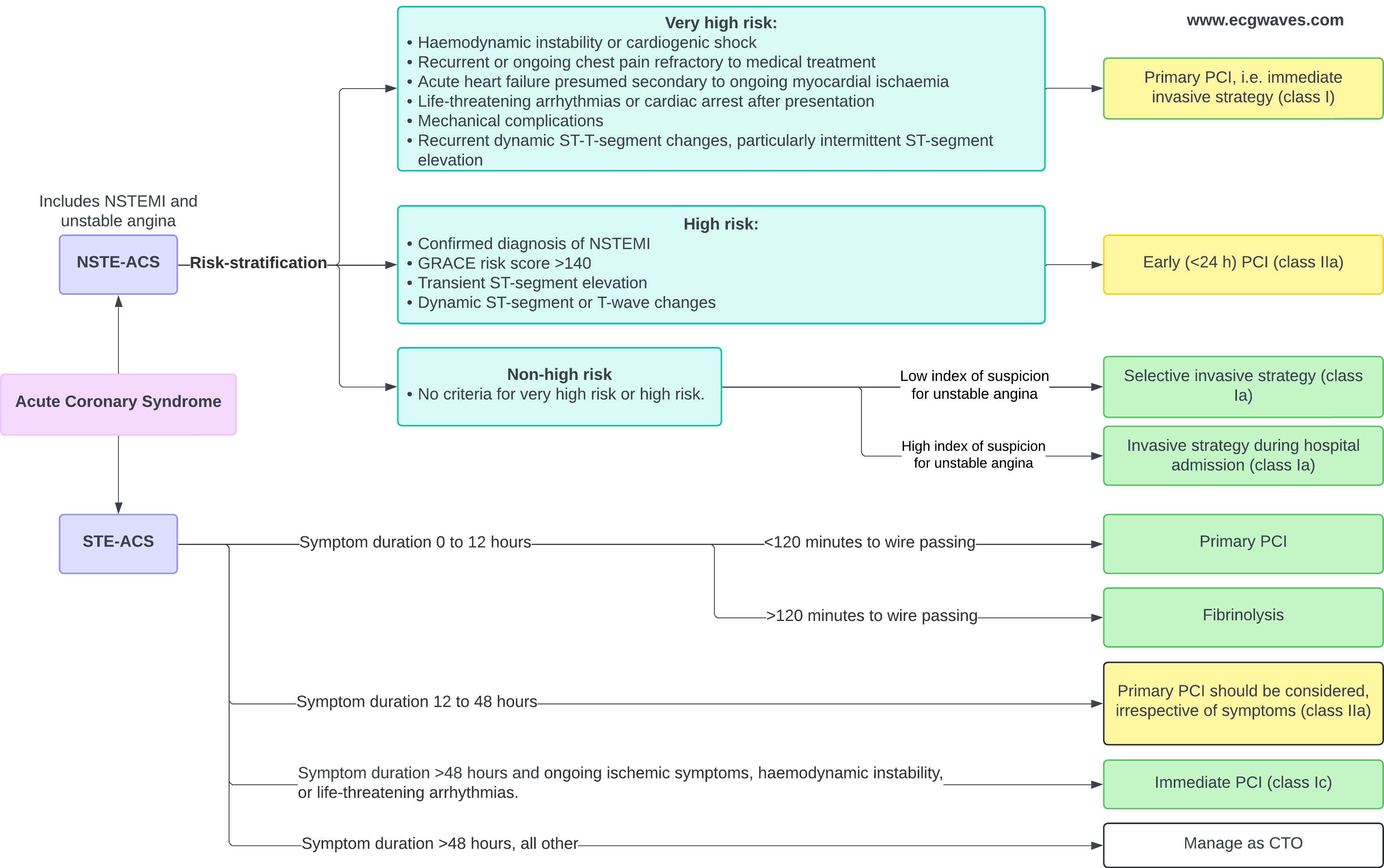
Prepare for clinical practice and the Cardiology Board Exam with our comprehensive quiz, designed based on the most recent AHA, ACC, and ESC guidelines. The questions are primarily theoretical and are intended to test…
- 7
- quizzes
- 993
- questions
Quizzes in this course
- Management of Acute Coronary Syndromes171 questions
- 01What combination of parameters is recommended for the diagnosis and initial short-term risk stratification of acute coronary syndrome (ACS)?
- 02What is the recommended target time for recording and interpreting a 12-lead ECG at the point of first medical contact (FMC) for patients with suspected acute coronary syndrome?
- 03In patients with suspected acute coronary syndrome (ACS), when is continuous ECG monitoring and the availability of defibrillator capacity recommended?
- 04In cases of suspected acute coronary syndrome, when is the use of additional ECG leads (V3R, V4R, and V7-V9) recommended?
- 05In patients with suspected acute coronary syndrome, what is recommended in cases with recurrent symptoms or diagnostic uncertainty?
- 06What is recommended regarding the measurement of cardiac troponins in patients with suspected acute coronary syndrome?
- 07What is the recommended approach to rule in and rule out NSTEMI in patients with suspected acute coronary syndrome according to the guideline?
- 08What is recommended if the first two hs-cTn measurements of the 0 h/1 h algorithm are inconclusive and no alternative diagnoses explaining the condition have been made?
- 09In patients with suspected acute coronary syndrome, what is recommended for prognosis estimation?
- 10A 60-year-old woman with a history of hypertension and hyperlipidemia presents to the emergency department with a sudden onset of severe, crushing chest pain that began 45 minutes ago. An electrocardiogram (ECG) performed upon arrival shows significant ST-segment elevation in the inferior leads. What immediate management strategy should be pursued for this patient with suspected ST-elevation myocardial infarction (STEMI)?
- Acute Myocardial Infarction: From Pathophysiology to Complications90 questions
- 01In the late 19th century, what was identified during postmortem examinations that suggested a relationship to myocardial infarction (MI)?
- 02The World Health Organization (WHO) initially defined myocardial infarction (MI) primarily based on which diagnostic modality?
- 03A 62-year-old male with a history of stable angina presents to the emergency department complaining of worsening chest pain at rest over the past 24 hours. His initial ECG shows ST-segment depression and T-wave inversion in the anterior leads. Serial troponin measurements are elevated above the 99th percentile upper reference limit. According to the Universal Definition of Myocardial Infarction, how should his condition be classified?
- 04A 68-year-old male with a history of hypertension presents to the emergency department complaining of generalized weakness and fatigue. He denies chest pain, shortness of breath, or palpitations. His initial ECG shows normal sinus rhythm with non-specific ST-T wave changes. Initial laboratory results reveal a markedly elevated cardiac troponin (cTn) level. Further questioning reveals that he has been undergoing hemodialysis for end-stage renal disease for the past 5 years. He denies any recent changes in his dialysis schedule or any new medications. What is the most appropriate initial diagnosis?
- 05A 62-year-old male with a history of hypertension and hyperlipidemia presents to the emergency department with severe, crushing chest pain that started approximately 30 minutes prior to arrival. An ECG (electrocardiogram) shows ST-segment elevation in the anterior leads. The patient is immediately taken for percutaneous coronary intervention (PCI). Assuming complete occlusion of the left anterior descending (LAD) artery, what is the earliest ultrastructural change expected in the myocardial cells supplied by the LAD?
- 06A 62-year-old male presents to the emergency department with complaints of chest pain and shortness of breath. His medical history includes hypertension and hyperlipidemia. An initial high-sensitivity cardiac troponin T (hs-cTnT) level is elevated above the 99th percentile upper reference limit (URL). A repeat hs-cTnT level, drawn 3 hours later, shows a further increase. Which of the following is the MOST accurate interpretation of these findings?
- 07A 68-year-old male presents to the emergency department with acute onset chest pain and shortness of breath. His initial troponin level is elevated above the 99th percentile upper reference limit (URL). An ECG shows no ST-segment elevation or depression. He has a history of hypertension and type 2 diabetes mellitus. Which of the following is the most important factor in determining whether this patient's elevated troponin indicates an acute myocardial infarction (MI)?
- 08A 62-year-old male presents to the emergency department complaining of fatigue and shortness of breath that began 3 days ago. He denies any chest pain. His electrocardiogram (ECG) shows no acute ST-segment changes. His initial cardiac troponin (cTn) level is elevated. Which of the following is the most accurate conclusion based on the information available?
- 09A 62-year-old male presents to the emergency department with complaints of chest pain that started an hour ago. His initial ECG shows no ST-segment elevation or significant T-wave changes. His initial cardiac troponin (cTn) level is 0.02 ng/mL (upper reference limit is 0.03 ng/mL). Six hours later, a repeat cTn level is still 0.02 ng/mL. The patient remains symptomatic with ongoing chest pain. Which of the following is the MOST appropriate next step in management?
- 10A 62-year-old male with a history of hypertension and hyperlipidemia presents to the emergency department with 2 hours of substernal chest pain radiating to his left arm. His ECG shows no ST-segment elevation or new bundle branch block. Initial troponin is elevated above the 99th percentile. Based on this information, which of the following is the most appropriate classification?
- Management of Ventricular Arrhythmias and Sudden Cardiac Arrest: Part 156 questions
- 01A 68-year-old male with a history of ischemic cardiomyopathy presents to the emergency department with sustained wide complex tachycardia at a rate of 180 bpm. He is hypotensive, with a blood pressure of 80/60 mmHg. An ECG shows a monomorphic ventricular tachycardia (VT). Initial attempts at intravenous amiodarone administration are unsuccessful, and the VT persists despite the infusion. The patient's condition continues to deteriorate. What is the next most appropriate step in management?
- 02A 62-year-old male with a history of a prior anterior ST-elevation myocardial infarction (STEMI) presents to the emergency department with palpitations and lightheadedness. His ECG shows a wide QRS complex tachycardia at a rate of 180 bpm. He is hemodynamically stable. What is the most appropriate initial step in the management of this patient?
- 03A 68-year-old male with a history of ischemic cardiomyopathy presents to the emergency department with palpitations and lightheadedness. His ECG shows a wide complex tachycardia at a rate of 180 bpm. The patient's blood pressure is 80/60 mmHg. The arrhythmia is sustained and unresponsive to vagal maneuvers. What is the most important next step in the management of this patient?
- 04A 62-year-old male with a history of hypertension and hyperlipidemia presents to the emergency department complaining of palpitations and near-syncope. He is diaphoretic and anxious. His initial heart rate is 180 bpm. The ECG shows a wide complex tachycardia with continuously changing QRS complex morphology and no clear isoelectric baseline between the QRS complexes. What is the most likely diagnosis?
- 05A 62-year-old male presents to the emergency department with palpitations and lightheadedness. An ECG reveals a wide-complex tachycardia with a rate of 180 bpm. The QRS complexes demonstrate a right bundle branch block (RBBB) morphology. The rhythm spontaneously terminates after 25 seconds, and the patient's symptoms resolve. An extensive cardiac workup, including echocardiography and cardiac MRI, reveals no structural heart disease or evidence of an inherited ion channel disorder. What is the most likely classification of this patient's ventricular tachycardia (VT)?
- 06A 32-year-old female presents to the clinic complaining of palpitations and occasional lightheadedness, particularly during exercise. An ECG reveals a wide complex tachycardia with a left bundle branch block (LBBB) morphology, inferior axis, and transition in leads V3-V4. Which of the following is the most likely origin of the ventricular tachycardia (VT)?
- 07A 25-year-old male collapses during a basketball game. He is successfully resuscitated after experiencing ventricular fibrillation (VF). His past medical history is unremarkable, and he denies any family history of sudden cardiac death. An ECG reveals a prolonged QTc interval. Genetic testing is positive for a mutation associated with abnormal cardiac ion channel function. Which of the following inherited arrhythmia syndromes is most likely responsible for this patient's presentation?
- 08A 62-year-old male with a history of a prior myocardial infarction presents to the emergency department with sustained monomorphic ventricular tachycardia (VT). He is hemodynamically stable. An ECG during VT shows a QRS duration of 160 ms with a left bundle branch block (LBBB) morphology and a QS complex in V1. Coronary angiography reveals non-obstructive coronary artery disease (CAD). Which of the following features on the VT ECG tracing would further increase the likelihood that the VT is scar-related?
- 09A 68-year-old male with a history of prior myocardial infarction presents to the emergency department with palpitations and near-syncope. His ECG shows a wide QRS complex tachycardia at a rate of 180 bpm. All precordial leads (V1-V6) show positive deflections. What is the most likely diagnosis?
- 10A 68-year-old male with a history of hypertension and no prior documented arrhythmias presents to the emergency department with palpitations and dizziness. An ECG reveals a wide QRS complex tachycardia at a rate of 180 bpm. The QRS morphology resembles a right bundle branch block (RBBB) pattern. The patient states he has never been told he has RBBB before. Which of the following is the MOST likely origin of the patient's wide complex tachycardia?
- Management of Heart Failure230 questions
- 01A 62-year-old male with a history of essential hypertension and a remote anterior myocardial infarction presents for a routine evaluation. He leads an active lifestyle, jogging two miles daily, and explicitly denies any dyspnea on exertion, orthopnea, paroxysmal nocturnal dyspnea, or peripheral edema. A recent echocardiogram reveals a left ventricular ejection fraction of 38% with focal apical akinesis. Which of the following best describes his current heart failure (HF) classification and the primary goal of therapeutic intervention?
- 02A 65-year-old male presents to the clinic for a routine follow-up. Six months ago, he was diagnosed with heart failure when he presented with significant dyspnea on minimal exertion and orthopnea. At that time, his echocardiogram revealed a left ventricular ejection fraction of 35%, and he was initiated on comprehensive medical therapy. Today, he reports feeling excellent, routinely walks 3 miles daily without any shortness of breath, fatigue, or palpitations, and has no signs of fluid overload on examination. How should this patient's heart failure currently be classified?
- 03A 65-year-old woman presents to the cardiology clinic complaining of fatigue, shortness of breath when walking up a flight of stairs, and swelling in both ankles. She has a medical history of hypertension, obesity, and type 2 diabetes mellitus. Physical examination reveals an elevated jugular venous pressure, bilateral crackles at the lung bases, and 2+ pitting edema in the lower extremities. A transthoracic echocardiogram is performed, showing a left ventricular ejection fraction (LVEF) of 54% with evidence of impaired relaxation. Based on her LVEF, which of the following represents the correct classification for this patient's heart failure?
- 04A 62-year-old man presents for a routine follow-up of heart failure. Two years ago, he experienced an anterior wall myocardial infarction, after which his left ventricular ejection fraction (LVEF) was measured at 35%. He was started on comprehensive medical therapy. A repeat echocardiogram today shows an LVEF of 44%. He currently experiences mild dyspnea only with strenuous activity. Which of the following is the most appropriate consideration regarding his current left ventricular ejection fraction status?
- 05A 68-year-old female presents with a 6-month history of exertional dyspnea and progressive fatigue. Her medical history includes hypertension, obesity, and type 2 diabetes mellitus. On physical examination, her blood pressure is 142/86 mmHg, and her heart rate is 78 beats per minute. A comprehensive metabolic panel and complete blood count are unremarkable. Her B-type natriuretic peptide (BNP) level is 35 pg/mL (normal). A resting transthoracic echocardiogram reveals a left ventricular ejection fraction (LVEF) of 55%, with no obvious structural heart disease or elevated filling pressures at rest. Which of the following is the most appropriate next step in the diagnostic evaluation for heart failure with preserved ejection fraction (HFpEF)?
- 06A 58-year-old male with a history of hypertension and coronary artery disease was diagnosed with heart failure two years ago. At the time of diagnosis, his left ventricular ejection fraction (LVEF) was 25%. He was started on guideline-directed medical therapy (GDMT) and has been strictly adherent. Today, he reports feeling well with no current symptoms of heart failure. A follow-up echocardiogram reveals an LVEF of 42%. Which of the following statements is most accurate regarding his current cardiac status?
- 07A 48-year-old woman with a history of non-ischemic cardiomyopathy presented two years ago with severe exertional dyspnea, orthopnea, and a left ventricular ejection fraction (LVEF) of 25%. She was started on guideline-directed medical therapy (GDMT) for heart failure (HF). During her current clinic visit, she reports feeling excellent and exercises daily without limitations. Her physical examination is unremarkable, with no signs of volume overload. A repeat echocardiogram shows an LVEF of 55%, normal left ventricular size, and complete resolution of her previous structural cardiac abnormalities. What is the most appropriate classification of this patient's current heart failure status?
- 08A 62-year-old male presents for a routine follow-up in the cardiology clinic. Two years ago, he was diagnosed with non-ischemic dilated cardiomyopathy and a left ventricular ejection fraction (LVEF) of 28%. He was initiated on comprehensive guideline-directed medical therapy (GDMT) and has been highly adherent. Today, he reports feeling well with no dyspnea or edema. A repeat echocardiogram demonstrates an LVEF of 53%. He asks if his heart failure has resolved and whether he can begin stopping his medications. Based on his trajectory, how should his current condition be classified and what is the appropriate approach to his pharmacological treatment?
- 09A 72-year-old woman presents with progressively worsening exertional dyspnea and fatigue. She has a history of hypertension and obesity. Her electrocardiogram (ECG) shows normal sinus rhythm. A resting transthoracic echocardiogram reveals a left ventricular ejection fraction (LVEF) of 58%, a left atrial volume index of 38 mL/m², an increased left ventricular (LV) mass index, and a resting E/e' ratio of 11. Her B-type natriuretic peptide (BNP) level is 85 pg/mL (normal < 100 pg/mL). Clinical suspicion for heart failure with preserved ejection fraction (HFpEF) remains high, but the diagnosis is uncertain given the equivocal resting filling pressures. Which of the following is the most appropriate next step to help definitively establish the diagnosis?
- 10A 62-year-old male follows up in the cardiology clinic for a routine evaluation. Eighteen months ago, he presented with progressive dyspnea and was diagnosed with heart failure with reduced ejection fraction (HFrEF) based on a left ventricular ejection fraction (LVEF) of 32% on echocardiography. He was initiated on appropriate medical therapy, including sacubitril/valsartan, carvedilol, spironolactone, and dapagliflozin. He has been adherent to his medications and currently reports no dyspnea, orthopnea, or edema. A repeat echocardiogram performed today demonstrates an LVEF of 46%. Which of the following is the most appropriate recommendation regarding his medical therapy?
- Management of Ventricular Arrhythmias and Sudden Cardiac Arrest: Part 2167 questions
- 01A 65-year-old woman is admitted to the cardiac unit for symptomatic palpitations and lightheadedness. On continuous electrocardiogram (ECG) telemetry, she is noted to have a run of 15 consecutive broad QRS complex beats at a rate of 140 beats per minute without preceding P-waves. The QRS complexes continually change in morphology from beat to beat. The episode terminates spontaneously after 12 seconds without the need for medical intervention. Based on these findings, how is this specific arrhythmia episode best classified?
- 02A 62-year-old man with a history of an ischemic cardiomyopathy and an implantable cardioverter-defibrillator (ICD) presents to the emergency department. Interrogation of the device reveals that he has had four distinct episodes of sustained ventricular tachycardia over the last 12 hours. Each episode was separated by at least 30 minutes of normal sinus rhythm and was successfully terminated by an appropriate shock from the ICD. Which of the following terms best describes this clinical scenario?
- 03A 22-year-old previously healthy female unexpectedly collapses and dies in her sleep. A thorough post-mortem evaluation is conducted to determine the cause. The detailed pathological assessment reveals no structural cardiac abnormalities or other anatomic anomalies, and a comprehensive toxicological screen is entirely negative. What is the most appropriate diagnostic term for this unexplained event in an individual older than 1 year?
- 04A 48-year-old male with a non-ischemic dilated cardiomyopathy and an implantable cardioverter-defibrillator experiences multiple appropriate shocks for recurrent sustained ventricular tachycardia (VT) refractory to amiodarone. He is referred for catheter ablation. Given the high procedural complexity anticipated with a non-ischemic etiology, he is directed to a specialized center. Which of the following represents the necessary operator experience and institutional capabilities required for this specialized center?
- 05A 42-year-old previously healthy man collapses while jogging and dies before the arrival of emergency medical services. He had no known medical history and had not seen a physician in years. His family is devastated and asks the attending physician about the likelihood of this being a sudden cardiac death (SCD) and whether an autopsy is necessary. Based on epidemiological data and recommended protocols for suspected SCD, which of the following is the most accurate statement regarding this presentation?
- 06A 75-year-old male with a history of hypertension, hyperlipidemia, and coronary artery disease (CAD) presents to the cardiology clinic for a routine follow-up. He expresses concern about his risk of sudden cardiac death (SCD) after a friend of the same age recently passed away from an out-of-hospital cardiac arrest. During a teaching discussion regarding the epidemiological characteristics of SCD in patients like this one, which of the following statements is accurate?
- 07A 36-year-old male suddenly collapses and suffers sudden cardiac arrest while playing a recreational game of basketball. Resuscitative efforts are unsuccessful. Which of the following is the most likely underlying cause of sudden cardiac death in a patient in this decade of life?
- 08A 45-year-old male with no known history of cardiovascular disease presents to his physician for a wellness exam. He expresses significant anxiety about sudden cardiac death (SCD) after a co-worker recently died unexpectedly. He has no exertional symptoms, palpitations, or family history of premature cardiovascular disease. He inquires about the best strategy to assess and mitigate his risk for SCD. Which of the following represents the most effective approach for preventing SCD in this patient?
- 09An 82-year-old man with chronic coronary artery disease (CAD), severely reduced left ventricular ejection fraction (LVEF), and New York Heart Association (NYHA) class III heart failure is evaluated for an implantable cardioverter-defibrillator (ICD) for the primary prevention of sudden cardiac death (SCD). He also has advanced chronic obstructive pulmonary disease and metastatic prostate cancer, both of which confer a high near-term mortality risk. Which of the following concepts best describes why the placement of an ICD may be of limited benefit for this specific patient?
- 10A clinical researcher is reviewing a newly published risk calculator for sudden cardiac death (SCD) to determine its suitability for identifying patients who may benefit from an implantable cardioverter-defibrillator (ICD). Which of the following methodological characteristics represents a typical shortcoming in the development and validation of such risk prediction models?
- Management of Valvular Heart Disease161 questions
- 01A 28-year-old female who recently immigrated from a low-income country presents to the cardiology clinic with progressive dyspnea on exertion, orthopnea, and occasional hemoptysis. Physical examination reveals a loud S1, an opening snap, and a low-pitched mid-diastolic rumble at the cardiac apex. Multimodality imaging is utilized to determine the pathophysiology and assess the severity of her valvular heart disease (VHD). Based on her region of origin, what is the principal cause of this patient's underlying valvular pathology?
- 02A 65-year-old male with a history of rheumatic fever presents with progressive dyspnea on exertion and orthopnea. Physical examination reveals a loud S1, an opening snap, and a low-pitched mid-diastolic murmur at the cardiac apex. Initial comprehensive transthoracic echocardiography (TTE) confirms the presence of mitral stenosis (MS) but provides suboptimal visualization of the mitral valve (MV) apparatus and left atrial appendage due to poor acoustic windows. Which of the following imaging modalities has a central diagnostic role and is most appropriate to further evaluate the MV anatomy and rule out thrombosis in this patient?
- 03A 68-year-old man is evaluated for progressive dyspnea and fatigue. Physical examination reveals a bounding pulse and a blowing, decrescendo diastolic murmur at the left sternal border. Transthoracic echocardiography (TTE) confirms aortic regurgitation (AR), but the quantitative severity is equivocal due to suboptimal acoustic windows. Which advanced imaging modality has gained key value in clinical practice specifically for the detailed evaluation and quantification of this regurgitant lesion?
- 04A 68-year-old male with known severe aortic stenosis (AS) presents for clinical evaluation. He reports no functional limitations and states he is completely asymptomatic during his daily activities. A resting transthoracic echocardiography (TTE) reveals a peak aortic jet velocity of 4.3 m/s, a mean transvalvular gradient of 44 mmHg, and a normal left ventricular ejection fraction of 62%. To best unveil potential hidden symptoms, assess dynamic changes in valvular severity, and refine the indication for intervention, which of the following is the most appropriate next diagnostic step?
- 05A 78-year-old male with severe, symptomatic mitral regurgitation and multiple comorbidities is evaluated for a transcatheter mitral valve replacement. To adequately plan the procedure, the structural heart team needs to accurately size the prosthesis, delineate the extent of mitral annular calcification (MAC), and evaluate the precise spatial relationship of the mitral valve apparatus with the left ventricular outflow tract (LVOT) to predict the risk of LVOT obstruction. Which of the following imaging modalities is most appropriate for obtaining these specific pre-procedural measurements?
- 06A 78-year-old woman with severe symptomatic aortic stenosis and multiple comorbidities is being evaluated by the Heart Team for surgical aortic valve replacement. During the multidisciplinary meeting, the team discusses estimating her surgical risk using established scoring systems. Which of the following statements regarding the use of these risk scores is most accurate?
- 07A 72-year-old man with a history of recurrent right-sided heart failure is evaluated for severe peripheral edema, hepatic congestion, and ascites. Transthoracic echocardiography reveals massive isolated tricuspid regurgitation with a structurally normal left ventricle. The multidisciplinary team is considering him for a first-time isolated tricuspid valve (TV) surgery. To properly counsel the patient and evaluate procedural mortality risk, the team discusses the optimal risk stratification tool. Which of the following is the most appropriate risk scoring strategy for this patient?
- 08A 74-year-old female presents with symptomatic severe aortic stenosis, complaining of worsening exertional dyspnea over the past six months. Her past medical history is significant for Hodgkin lymphoma treated with mediastinal radiation therapy 40 years ago. A chest computed tomography (CT) scan reveals a porcelain aorta. The Heart Team is evaluating her for either surgical aortic valve replacement (SAVR) or transcatheter aortic valve implantation (TAVI). Which of the following best describes how her specific clinical characteristics should influence the choice of intervention?
- 09A 72-year-old asymptomatic male with severe aortic stenosis presents for a routine follow-up. Echocardiography shows stable parameters since his last visit 6 months ago. To further stratify his risk and help determine the most appropriate timing for intervention, his cardiologist orders biomarker testing. Which of the following biomarker parameters has been shown to be a powerful, independent, and incremental predictor of mortality in this patient population?
- 10A 74-year-old man with severe aortic stenosis (AS) presents for a routine evaluation. He reports feeling entirely well and denies experiencing any dyspnea, angina, or presyncope. However, his family notes that over the past two years, he has gradually stopped his daily two-mile walks and mostly remains sedentary, which the patient attributes to "normal aging." A treadmill exercise test is ordered. What is the most critical rationale for performing exercise testing in this specific clinical scenario?
- Management of Supraventricular Tachycardias118 questions
- 01A 42-year-old woman presents to the emergency department with sudden-onset palpitations and lightheadedness. Her blood pressure is 110/70 mmHg, and her heart rate is 170 beats per minute. A 12-lead electrocardiogram (ECG) demonstrates a regular rhythm with a QRS duration of 135 ms. Which of the following principles regarding the classification and presentation of her tachycardia is correct?
- 02A 42-year-old female with a structurally normal heart is undergoing an electrophysiology study for recurrent episodes of narrow-complex tachycardia. Intracardiac mapping and pacing maneuvers demonstrate that the tachycardia is initiated by oscillations in the membrane potential occurring during the repolarization phase, specifically identified as early after-depolarizations. What is the fundamental electrophysiologic classification of this patient's arrhythmia?
- 03A 35-year-old woman with no past medical history presents to the emergency department complaining of sudden-onset, rapid palpitations. An electrocardiogram (ECG) confirms a paroxysmal supraventricular tachycardia (SVT). She is diagnosed with lone paroxysmal SVT. Compared to SVT patients who have underlying cardiovascular disease, which of the following clinical characteristics is most likely to be observed in this patient?
- 04A 24-year-old male presents to the cardiology clinic with recurrent episodes of sudden-onset, rapid palpitations. A resting 12-lead electrocardiogram (ECG) reveals a short PR interval and a delta wave. He is referred for an electrophysiology study and potential catheter ablation for presumed atrioventricular reentrant tachycardia (AVRT). During a discussion regarding the epidemiology of his condition, which of the following characteristics best describes the demographic and age-related trends of AVRT?
- 05A 24-year-old woman is evaluated in the cardiology clinic following a successful radiofrequency catheter ablation for atrioventricular nodal re-entrant tachycardia (AVNRT). She had been previously managed with antiarrhythmic drugs but opted for ablation due to breakthrough symptoms. She inquires about the long-term success of the procedure and any demographic-specific risks. Which of the following statements is most accurate regarding her clinical course and prognosis?
- 06A 34-year-old woman presents to the outpatient cardiology clinic with complaints of episodic, rapid palpitations that begin and terminate abruptly. She notes that these episodes first started when she was 14 years old and have occurred intermittently ever since. During a recent episode, a 12-lead electrocardiogram (ECG) demonstrated a regular narrow-complex tachycardia. Based on the chronicity and age of onset of her symptoms, what is the most likely primary electrophysiologic mechanism of her arrhythmia?
- 07A 28-year-old female presents to the cardiology clinic reporting recurrent episodes of sudden-onset rapid heart rate. She mentions that during the episodes, she experiences a prominent "pounding in her neck" and has even noticed her shirt flapping in rhythm with her heartbeat. She previously attributed these episodes to panic attacks. The episodes typically last for 30 to 45 minutes before resolving abruptly. Based on this clinical presentation, what is the most likely cause of her symptoms?
- 08A 34-year-old woman presents to the cardiology clinic reporting recurrent episodes of rapid palpitations over the past six months. She has not yet been able to have an electrocardiogram (ECG) recorded during an episode. She describes the palpitations as starting and stopping completely out of the blue, often triggered when she bends over to tie her shoes or pick up her child. She states that her heartbeat feels very fast but completely regular during the episodes. Recently, she discovered that chugging a large glass of ice-cold water sometimes abruptly stops the palpitations. Based on her clinical history, what is the most likely underlying mechanism of her arrhythmia?
- 09A 24-year-old male presents to the cardiology clinic complaining of sporadic, self-terminating episodes of rapid heartbeat associated with lightheadedness, typically occurring during physical exertion. His baseline 12-lead resting electrocardiogram (ECG) demonstrates a PR interval of 110 ms and a slurred upstroke of the QRS complex, consistent with apparent pre-excitation. His baseline echocardiogram is unremarkable. Which of the following tests would be particularly useful to further evaluate his condition?
- 10A 32-year-old woman with a history of sudden-onset, regular palpitations undergoes ambulatory electrocardiogram (ECG) monitoring. The recording captures the initiation of a regular narrow-complex tachycardia. The event is triggered by a premature atrial beat that is immediately followed by a sudden, marked prolongation of the PR interval just prior to the onset of the tachycardia. Which of the following is the most likely diagnosis?